TRAINING SERVICE PROVIDERS TO SUPPORT AUTISTIC INDIVIDUALS
Section 4.1 Activity suggestions on Body awareness, anatomical knowledge and interoception
Goals
The goal of this chapter is to help individuals to:
● Identify body parts (both public and private)
● Understand basic body functions
● Develop a healthy sense of body ownership, safety, and autonomy
● Develop the ability to perceive and process internal bodily signals
Teaching Strategies
Visual Supports
Using visual aids is one of the most effective strategies when teaching individuals with autism, especially for concrete and sensitive topics such as anatomy and body awareness.
Suggestions:
● Use body charts, illustrated books, flashcards, digital apps, or realistic 3D models (e.g., dolls or mannequins).
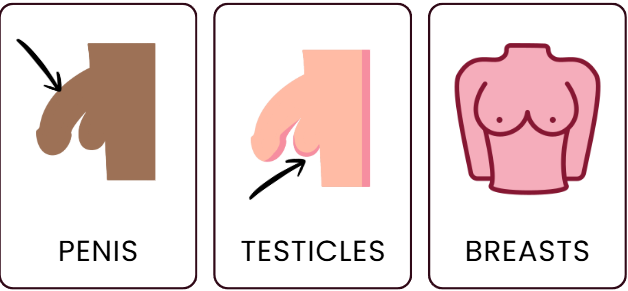
● Choose realistic and inclusive visuals that represent different body types, skin tones, genders and abilities to foster accurate understanding and respect for diversity.
● Try interactive visuals, such as:
o Body posters with Velcro labels
o Flap books with hidden body parts
o Apps that allow learners to “dress” avatars or name body parts
● To help individuals distinguish between public and private body parts, use:
o Colour codes (e.g., green = public, red = private)
o Symbols (e.g., padlock for private parts)
Tip: Labelling activities paired with songs or routines can help reinforce understanding.
Social Stories
Social stories provide a safe, visual and predictable way to introduce new or sensitive topics. They are instrumental when teaching body ownership, privacy, and consent. Using concrete, straightforward language, social stories help learners understand what body parts do and support learning about safe and unsafe touch, personal boundaries, and public versus private behaviour.
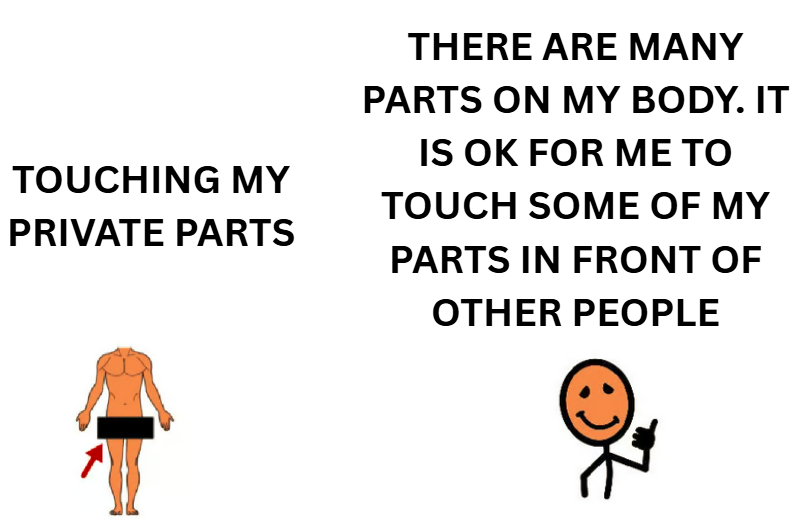
Suggested topics for body awareness social stories:
● Naming My Body Parts
● Private and Public Parts
● When a Doctor Checks My Body
● Keeping My Body Clean
● Touching Rules
● I Can Say ‘No’
Role-Playing
Role-playing helps learners practice different scenarios in a safe, controlled way. It allows them to rehearse real-life scenarios, such as:
● Saying “No” when uncomfortable
● Asking for help from a trusted adult
● Pointing to body parts during medical visits
Tips:
● Use dolls or puppets if the child is hesitant to act things out themselves
● Provide scripted phrases for common scenarios (e.g., “Please stop,” “I don’t like that”)
● Praise participation and repeat the role-play with variations
Positive Reinforcement
Positive reinforcement builds confidence and motivation, especially when learning topics that may feel unfamiliar or uncomfortable.
Celebrate every step of progress, no matter how small. Use:
● Verbal praise (“Great job pointing to your shoulders!”)
● Stickers or tokens
● Visual rewards (e.g., smiley faces, achievement charts)
Optional Materials to Create
● Body Part Flashcards: Illustrated cards showing different body parts with both anatomical and socially appropriate names.
● Interactive Body Charts: Large posters or foldable charts with Velcro or flaps to label and uncover body parts.
● Public vs Private Body Part Sorting Cards: Cards featuring images or icons to sort into “public” and “private” categories, using colour codes or symbols.
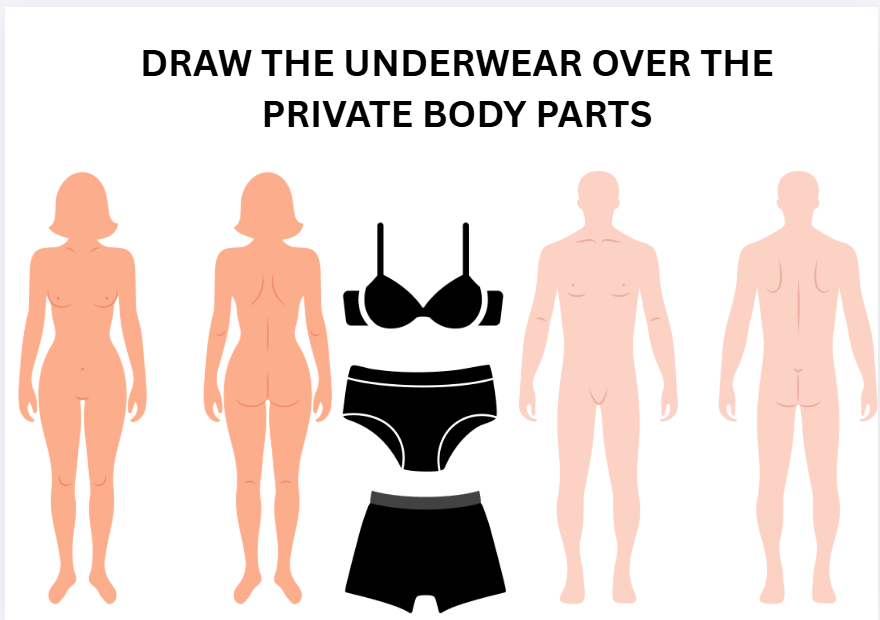
● 3D Body Models or Dolls: Realistic or simplified models for hands-on exploration and labelling.
● “My Body” Colouring Pages: Outline drawings of a human body for colouring and labelling activities.
● Social Story Booklets: Printable or laminated short stories on body ownership, boundaries, and hygiene.
● Body Part Songs and Visuals: Visual aids and lyric sheets for songs like “Head, Shoulders, Knees and Toes,” adapted with social/emotional cues.
● Movement Game Cards: Cards with body part movement prompts for games like Simon Says or Follow-the-Leader.
● Private vs Public Space Posters: Colour-coded posters that visually explain private and public zones on the body.
● Personal Hygiene Visual Schedules: Step-by-step illustrated guides for routines such as washing hands or brushing teeth.
Suggested Activities
Movement & Imitation Games
● Simon Says: Give commands like “Touch your nose” or “Clap your hands.” Emphasise both public and private parts (using safe, respectful phrasing).
● Follow-the-Leader: Have the leader perform movements using different body parts. Encourage learners to copy.
● Dance & Freeze: Freeze when the music stops and name the body part you’re touching.
Hands-On Activities
● Drawing or Colouring the Human Body: Use outlines, with learners labelling or colouring different parts (e.g., “Colour your legs blue”).
● Matching Body Parts: Match images to parts on a chart, 3D models, or even on a doll.
● Sorting Game – Public vs. Private: Use cards or objects and have learners sort them into two baskets or labelled mats.
Mindful Check-ins
Mindful check-ins can be brief, lasting only ten seconds, or extended into longer exercises. They involve observing sensations without judgment, identifying and labelling what is noticed in the body and gradually learning to connect these sensations with emotional states. For instance, one exercise involves holding a hot or cold drink, noticing sensations in the hand and arm, releasing the cup, and then observing changes in sensation before repeating the process.
Body Scans
Body scans involve intentionally moving attention through different areas of the body, from feet to head, and noticing sensations with descriptive rather than evaluative language. For example, instead of labeling a feeling as “anxious,” one might describe it as “tight,” “heavy,” or “springy.” This approach improves both body awareness and the ability to articulate subtle physical experiences.
Interoception on the Go
Quick check-ins during daily activities can also improve interoceptive skills. Activities such as washing hands, showering, or eating provide opportunities to notice sensations and later connect them to emotional states like hunger, irritability, or contentment. Setting reminders or linking check-ins to routine tasks helps build consistency and strengthens body-emotion connections.
How Low Can You Go
Kelly Mahler introduced the playful “How Low Can You Go” exercise, designed to increase awareness of heartbeat and practice nervous system regulation. The activity begins with raising the heart rate through movement (e.g., jumping jacks), estimating it, and then measuring it. With practice, participants aim to lower their heart rate within 60 seconds by experimenting with calming strategies such as slow breathing or visualisation. Over time, this exercise trains the body to down-regulate more effectively, which can be especially helpful for neurodivergent individuals experiencing stress or sensory overload (Asher, 2018).