TRAINING SERVICE PROVIDERS TO SUPPORT AUTISTIC INDIVIDUALS
Section 4.4 Activity sugguestions on Sexual and gender diversity
1. Concept Sorting with Visual Cards
Goal: Understand differences between key concepts
Provide cards with:
● Gender identity (woman, man, nonbinary, agender)
● Gender expression (clothes, hairstyle, voice)
● Sexual orientation (gay, straight, bisexual, asexual)
● Relationships (friendship, romantic, family)
Learners sort cards into labeled categories.
Why it works for autistic learners
● Clear structure
● Reduces abstraction
● Encourages pattern recognition
Adaptation: Use color coding or icons (e.g., hearts for attraction, mirrors for identity).
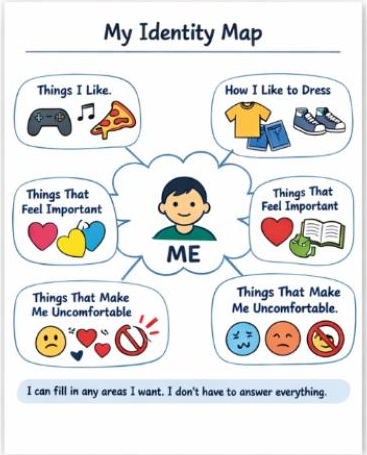
2. “Everyone Is Different” Identity Map
Goal: Build self-awareness and respect for differences
Create a personal identity map with optional sections:
● Things I like
● Things that feel important to me
● How I like to dress How I like to be treated
● Things that make me uncomfortable
Gender and sexuality are presented as optional, not mandatory.
Visual example how such an Identity Map can look: